FIRST DATE - AI Short Film
A 2-minute action short, made entirely with AI. Solo, from idea to final cut.
A café meet-cut that spirals into rooftop Lamborghini chaos — and that’s not even the craziest thing that happens. Both leads are real: me and my wife. It’s her wildly exaggerated memory of how we actually met.
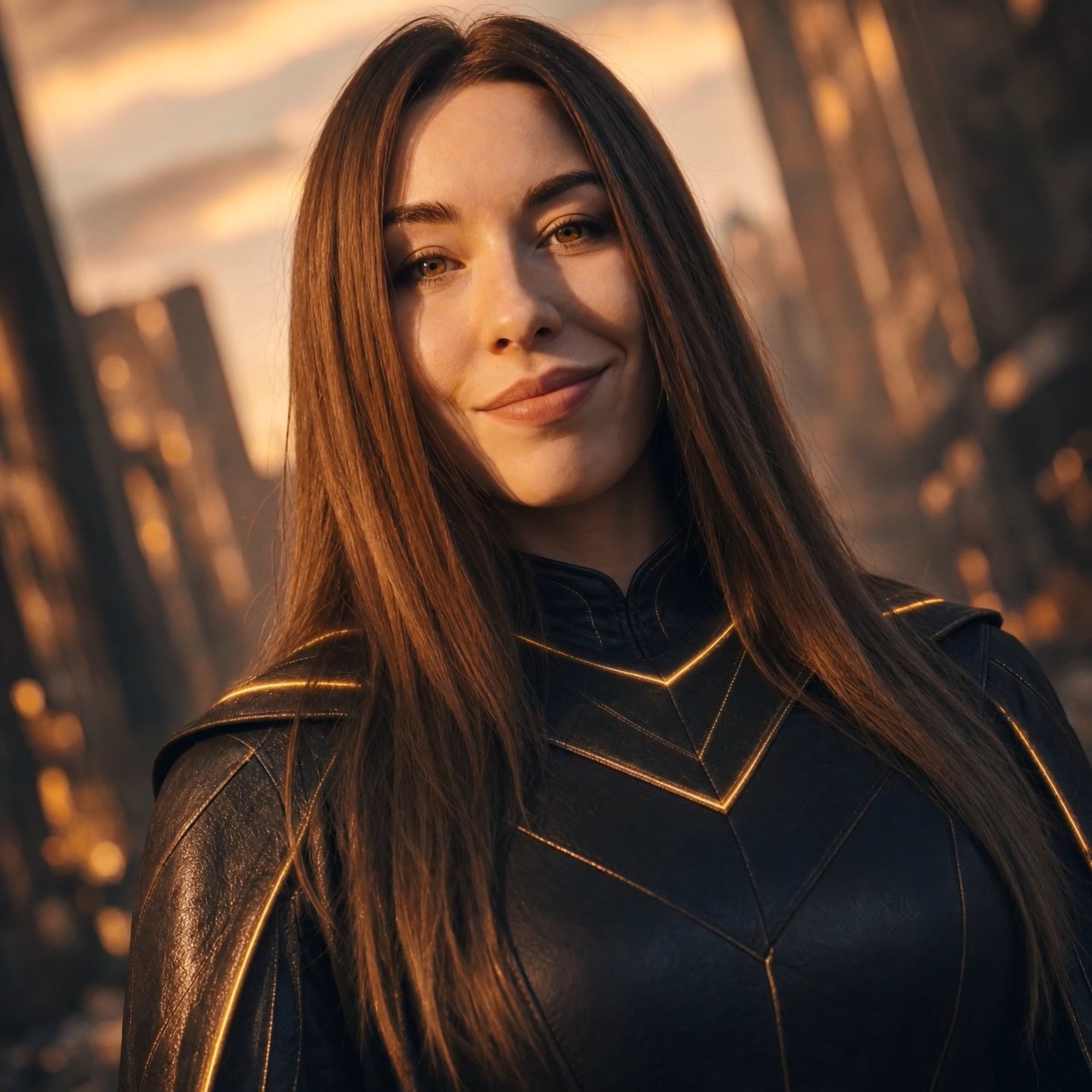
My first full test short, and a deliberately hard one: a single storyline, held together across dozens of shots, with two real people — me and my wife — as the leads. The story is her exaggerated version of how we met. It’s not flawless, but every rough edge taught me something, which was the point.
The real work wasn’t generating pretty frames — anything looks good now. It was the problems the models don’t solve for you: holding two real, recognizable faces coherent across dozens of shots, different scenes and different models, with lighting and setting that stay consistent between separate generations. And getting shots that are rare or absent in the training data — at the exact angle the story needs, under specific conditions — instead of the generic beautiful thing the model wants to give you.
· Genre anchors instead of describing physics in words (full breakdown below).
· Shot-chains instead of one long, unstable clip — building sequences the models can actually hold.
· Splitting the hardest scenes into multiple passes the model can handle, then assembling them.
· Locking identity across generations so both faces read as the same people scene to scene.
· Start frames in GPT Image 2 & Nano Banana 2 (Magnific Spaces); motion in Kling 3.0 & Seedance 2. Edit, sound design and creative direction all by hand.
One key shot: a Lamborghini accelerates across a skyscraper rooftop, launches off the edge, and keeps flying forward on momentum. Neither Kling nor Seedance would do it — the car either braked at the edge, or dropped straight down like a real car would. The models’ built-in sense of physics overrode every text instruction.
What didn’t work:
· Direct commands — “don’t brake,” “don’t fall,” “keep the momentum.”
· Physics terminology — “ballistic trajectory,” “momentum conservation.” The car still fell along a parabola.
· Trying to add invisible ramps or a rooftop extension into the prompt.
What worked:
I stopped describing the physics and started summoning it as a genre. The models have whole categories in their training data where a car behaves exactly like this — record ramp jumps, stunt work, rally jumps. So I referenced them directly (“in the cinematic language of a Travis Pastrana long ramp jump”) and redefined the genre from the first line (“stylized cinematic physics — standard gravity is not applied; an impossible-stunt moment in the language of Fast & Furious”).
Success rate per iteration went from roughly zero to 40–50%. The takeaway: describing physics in words loses to summoning that same physics indirectly, through references to real video categories the model already knows.
A ~2-minute action short · directed, edited and sound-designed solo, from idea to final cut · start frames in GPT Image 2 & Nano Banana 2, motion in Kling 3.0 & Seedance 2.


- Client
- Personal Project
- Role
- AI Direction / Edit / Sound Design / Generative
- Tools
- GPT Image 2, Nano Banana 2, Kling 3.0, Seedance 2